





Agriculture is the backbone of India’s economy, and farmers are increasingly turning toward sustainable practices to improve productivity while protecting the environment. One of the most effective approaches is Organic Farming, which focuses on growing crops using natural methods instead of synthetic fertilizers and pesticides.
As consumer demand for chemical-free food continues to rise, Organic Farming is becoming a profitable and environmentally responsible choice for farmers.
What Is Organic Farming?
Organic Farming is an agricultural system that relies on natural fertilizers, compost, crop rotation, biological pest control, and eco-friendly farming techniques. It avoids the use of synthetic chemicals, genetically modified organisms (GMOs), and harmful pesticides.
The goal is to maintain soil fertility, produce healthy crops, and create a sustainable farming ecosystem.
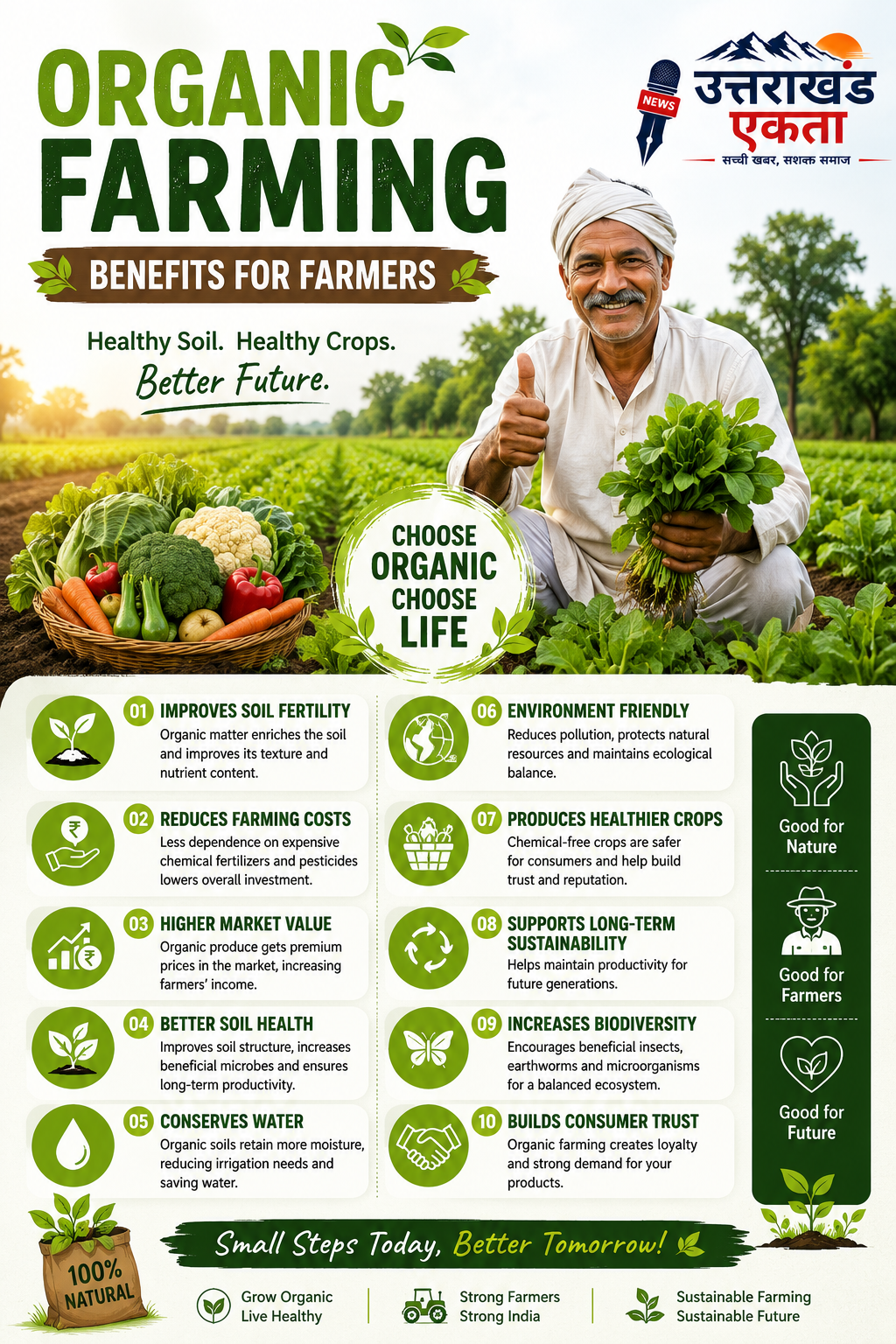
Benefits of Organic Farming for Farmers
1. Improves Soil Fertility
Healthy soil is the foundation of successful farming.
Organic farming enriches the soil by using:
- Compost
- Farmyard manure
- Green manure
- Vermicompost
- Biofertilizers
These natural inputs improve soil structure and long-term productivity.
2. Reduces Farming Costs
Although the transition to organic farming may require planning, farmers can significantly reduce expenses over time by minimizing their dependence on expensive chemical fertilizers and pesticides.
Many organic inputs can be prepared directly on the farm.
3. Higher Market Value
Organic produce often commands premium prices because consumers are willing to pay more for chemical-free, naturally grown food.
This increases farmers’ income and profitability.
4. Better Soil Health
Continuous use of chemical fertilizers can degrade soil quality.
Organic Farming helps:
- Increase beneficial microorganisms
- Improve water retention
- Reduce soil erosion
- Enhance nutrient availability
Healthy soil supports healthier crops year after year.
5. Environment-Friendly Farming
Organic farming protects natural resources by reducing pollution and preserving biodiversity.
It helps:
- Reduce groundwater contamination
- Protect wildlife
- Improve air quality
- Preserve beneficial insects and pollinators
6. Produces Healthier Crops
Crops grown organically are free from harmful chemical residues and are often preferred by health-conscious consumers.
Growing healthy produce also strengthens farmers’ reputation in the marketplace.
7. Conserves Water
Organic soils retain moisture more effectively, reducing irrigation needs during dry periods.
Better water management helps farmers cope with changing weather conditions.
8. Supports Long-Term Sustainability
Unlike intensive chemical farming, Organic Farming focuses on maintaining productivity for future generations by protecting natural resources.
Sustainable farming ensures consistent agricultural output over the long term.
9. Increases Biodiversity
Organic farms support a wide range of beneficial insects, birds, earthworms, and microorganisms that naturally improve soil health and pest control.
A balanced ecosystem contributes to healthier crops.
10. Builds Consumer Trust
Consumers are becoming more aware of food quality and environmental sustainability.
Farmers practicing Organic Farming often develop stronger customer loyalty due to the growing demand for safe and natural food products.
Challenges of Organic Farming
While organic farming offers many advantages, farmers should also be prepared for certain challenges:
- Initial transition period
- Organic certification requirements
- Lower yields during early years
- Greater labor requirements
- Pest management through natural methods
With proper training and support, these challenges can be successfully managed.
Tips for Successful Organic Farming
Farmers can improve success by:
- Using quality organic seeds
- Practicing crop rotation
- Preparing compost regularly
- Conserving rainwater
- Managing pests naturally
- Improving soil through organic matter
- Staying updated with modern organic farming techniques
Continuous learning is key to long-term success.
Why Organic Farming Is the Future
As awareness of environmental conservation and healthy food continues to grow, Organic Farming is expected to play a major role in the future of agriculture.
Governments, agricultural organizations, and consumers increasingly support sustainable farming methods that protect both farmers and the environment.
By adopting organic practices today, farmers can secure a healthier future for themselves, their families, and future generations.
Final Thoughts
Organic Farming is more than just a farming method—it’s a commitment to sustainable agriculture, healthier food, and environmental protection. While the transition may require patience and dedication, the long-term benefits include healthier soil, reduced costs, premium market prices, and improved livelihoods.
For farmers seeking sustainable growth and better returns, organic farming offers a promising path toward a prosperous future.