



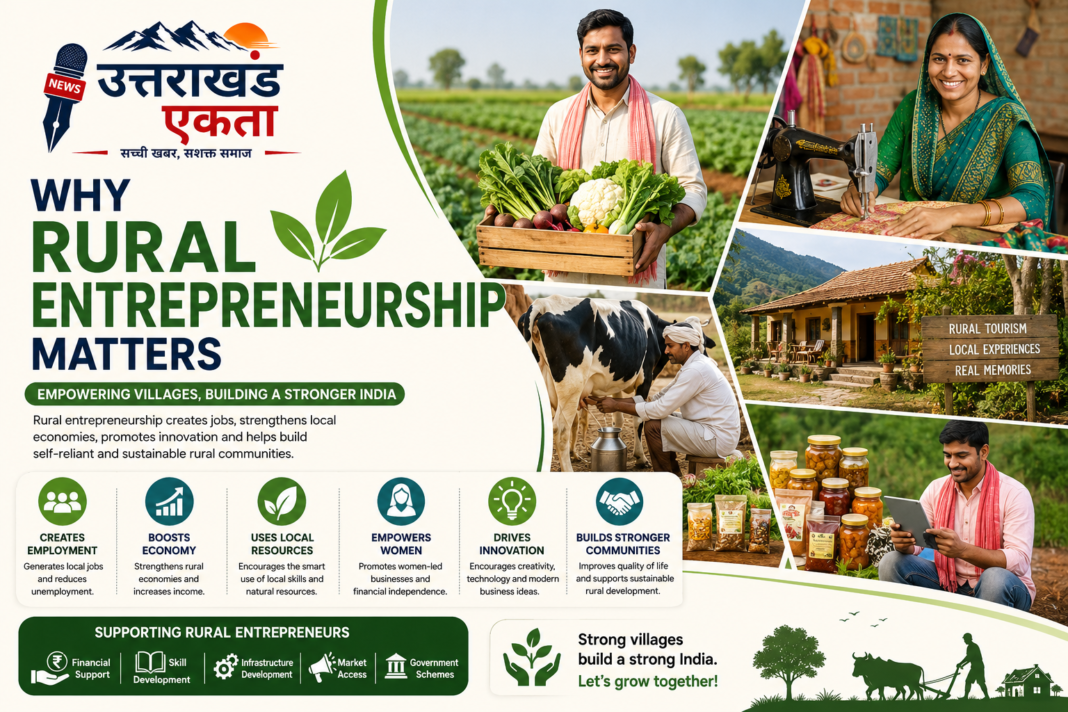

Rural India is the backbone of the country’s economy, contributing significantly to agriculture, handicrafts, small-scale industries, and local businesses. Today, Rural Entrepreneurship is transforming villages by creating employment opportunities, improving incomes, and reducing migration to urban areas. With government support, digital technology, and increasing market access, rural entrepreneurs are playing a crucial role in building a stronger and more self-reliant India.
Whether it’s agriculture, food processing, tourism, handicrafts, or digital services, Rural Entrepreneurship has become a powerful driver of sustainable economic growth.
What Is Rural Entrepreneurship?
Rural Entrepreneurship refers to starting and managing businesses in rural areas using local resources, skills, and opportunities. These businesses not only generate income for entrepreneurs but also create jobs and improve the overall quality of life within villages.
Examples include:
- Organic farming
- Dairy farming
- Poultry farming
- Handicrafts
- Food processing
- Rural tourism
- Beekeeping
- Small manufacturing units
- Digital service centers
Why Rural Entrepreneurship Is Important
Entrepreneurship in rural areas goes beyond earning profits—it contributes to the overall development of communities.
Key benefits include:
- Employment generation
- Economic development
- Better use of local resources
- Improved standard of living
- Women’s empowerment
- Youth engagement
- Sustainable rural growth
1. Creates Employment Opportunities
One of the biggest advantages of Rural Entrepreneurship is job creation.
Local businesses provide employment for:
- Farmers
- Skilled workers
- Women
- Youth
- Self-help groups
- Artisans
This reduces unemployment and strengthens the local economy.
2. Reduces Migration to Cities
Many people move to cities in search of better job opportunities.
When successful businesses are established in villages:
- Local employment increases.
- Families stay together.
- Urban overcrowding decreases.
- Rural communities become economically stronger.
Entrepreneurship helps create opportunities closer to home.
3. Promotes Local Resources
Every village has unique natural and human resources.
Entrepreneurs can utilize:
- Agricultural products
- Forest produce
- Traditional crafts
- Local skills
- Tourism attractions
This creates sustainable businesses while preserving local culture and traditions.
4. Encourages Innovation
Modern Rural Entrepreneurship combines traditional knowledge with innovative ideas.
Examples include:
- Organic farming techniques
- Digital marketing for rural products
- Solar-powered irrigation
- Agri-tech solutions
- Online marketplaces for local products
Innovation improves productivity and expands market reach.
5. Empowers Women
Women-led enterprises are becoming increasingly important in rural India.
Many successful businesses involve:
- Food processing
- Tailoring
- Handicrafts
- Dairy farming
- Self-help groups
- Home-based businesses
Entrepreneurship provides financial independence and strengthens women’s participation in the economy.
6. Strengthens Agriculture
Agriculture remains the foundation of rural India.
Entrepreneurs add value through:
- Food processing
- Cold storage
- Packaging
- Organic farming
- Farm equipment services
- Agri-input supply
These businesses improve farmers’ incomes and reduce post-harvest losses.
7. Boosts Rural Tourism
India’s villages offer rich cultural heritage, scenic beauty, and traditional lifestyles.
Rural tourism businesses include:
- Homestays
- Eco-tourism
- Adventure tourism
- Cultural experiences
- Local cuisine
- Nature trails
This creates additional income for rural families while promoting local traditions.
Government Support for Rural Entrepreneurs
The Government of India offers several schemes to encourage Rural Entrepreneurship, including:
- Startup India
- PM Formalisation of Micro Food Processing Enterprises (PMFME)
- Mudra Loan Scheme
- National Rural Livelihood Mission (NRLM)
- Stand-Up India
- Skill India Mission
- Agriculture Infrastructure Fund
These initiatives provide financial assistance, training, infrastructure, and business development support.
Challenges Faced by Rural Entrepreneurs
Despite growing opportunities, entrepreneurs may face challenges such as:
- Limited access to finance
- Inadequate infrastructure
- Market connectivity
- Digital literacy
- Transportation issues
- Technology adoption
Government initiatives and digital platforms are gradually helping overcome these barriers.
Tips for Building a Successful Rural Business
If you’re planning to start a rural enterprise:
- Identify local market demand.
- Use available natural resources wisely.
- Develop a clear business plan.
- Learn digital marketing skills.
- Take advantage of government schemes.
- Focus on quality products and services.
- Build strong customer relationships.
- Continue learning and improving.
Planning and persistence are key to long-term success.
Why Rural Entrepreneurship Is the Future
As India moves toward sustainable and inclusive growth, Rural Entrepreneurship will continue to play a vital role by:
- Strengthening village economies
- Encouraging innovation
- Supporting agriculture
- Preserving traditional industries
- Creating employment
- Improving rural infrastructure
- Contributing to national development
With increasing digital connectivity and government support, rural businesses have immense potential to compete in national and global markets.
Final Thoughts
Rural Entrepreneurship is more than starting a business—it’s about transforming communities, creating opportunities, and building a stronger future for rural India. From agriculture and food processing to tourism and handicrafts, rural enterprises contribute significantly to economic growth while improving livelihoods.
By embracing innovation, utilizing local resources, and leveraging government support, aspiring entrepreneurs can create sustainable businesses that benefit both their families and their communities.